
Fiji's Impossible Choice
The island nation of Fiji has become a test case for climate-driven relocation, but the funds needed to carry it out are slipping away. With the U.S. slashing aid and abandoning climate pledges under President Trump, the global safety net promised to nations most vulnerable to climate change is beginning to fray. In Fiji, many residents now face the choice between an underfunded push to relocate and the impulse to stay on the land of their ancestors, even as rising seas are inching closer to washing away their homes.
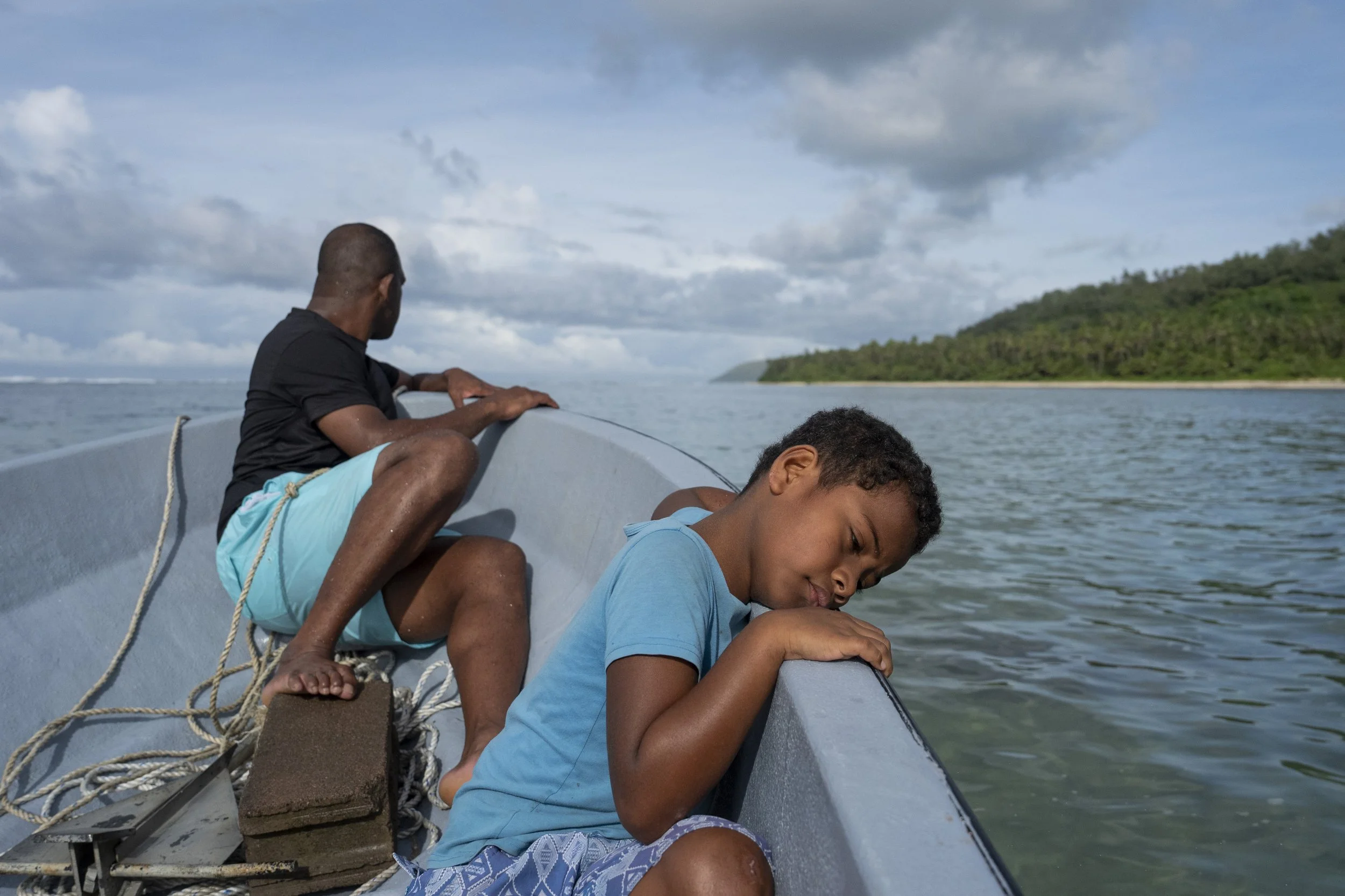
Luke Tuilawa, left, and Elena Qio, 8, go out to look for sea urchin and clams in Muani, Kadavu, Fiji on March 29, 2025. Muani, a coastal community that relies heavily on fishing, faces risks of storm surge and sea level rise due to climate change. The community residents constructed a drainage network to mitigate surface run-off. They also have a stone seawall at the same height as the village ground during high tide, which does not protect them from flooding. A nearby site is set aside for relocating the village, but the community’s connection to the land, the steep hills surrounding the community, and funding issues are all contributing to delays in moving. Meanwhile, large parts of the village are underwater during high tides or heavy rainfalls.
Fiji's Impossible Choice
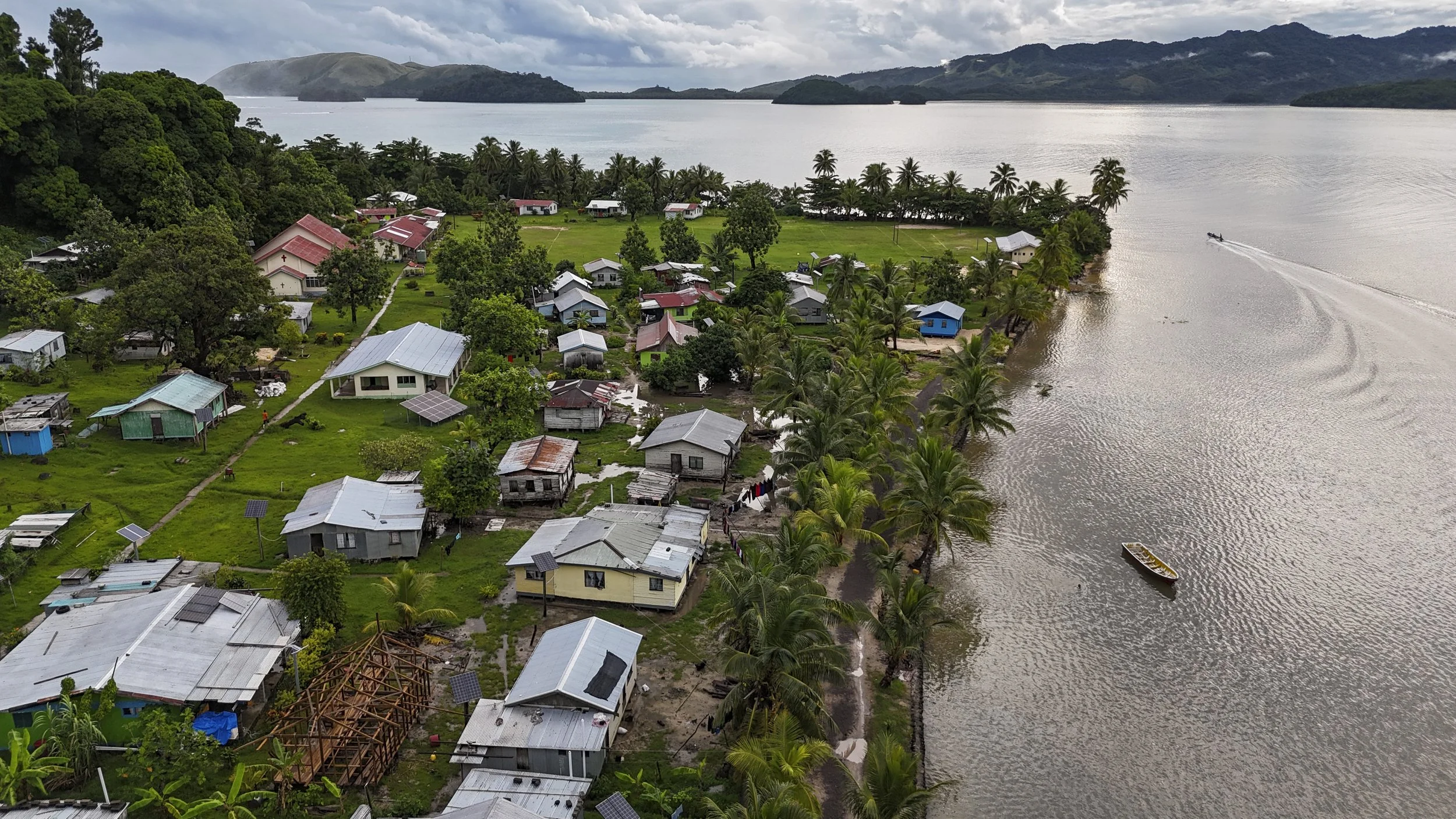
A fishing boat leaves Muani, Kadavu, Fiji on March 29, 2025. Muani, a coastal community that relies heavily on fishing, faces risks of storm surge and sea level rise due to climate change. The community residents constructed a drainage network to mitigate surface run-off. They also have a stone seawall at the same height as the village ground during high tide, which does not protect them from flooding. A nearby site is set aside for relocating the village, but the community’s connection to the land, the steep hills surrounding the community, and funding are all contributing to delays in moving. Meanwhile, large parts of the village are underwater during high tides or heavy rainfalls. One community member, frustrated with the delays in moving the village, decided to begin constructing his family's new home on the original land, as seen in the bottom of the image, using money he made working abroad. Building his home in a place that floods was a controversial choice, but the timing of the relocation is uncertain and continues to be delayed. He decided this land was his home and his family needed shelter.
Fiji's Impossible Choice
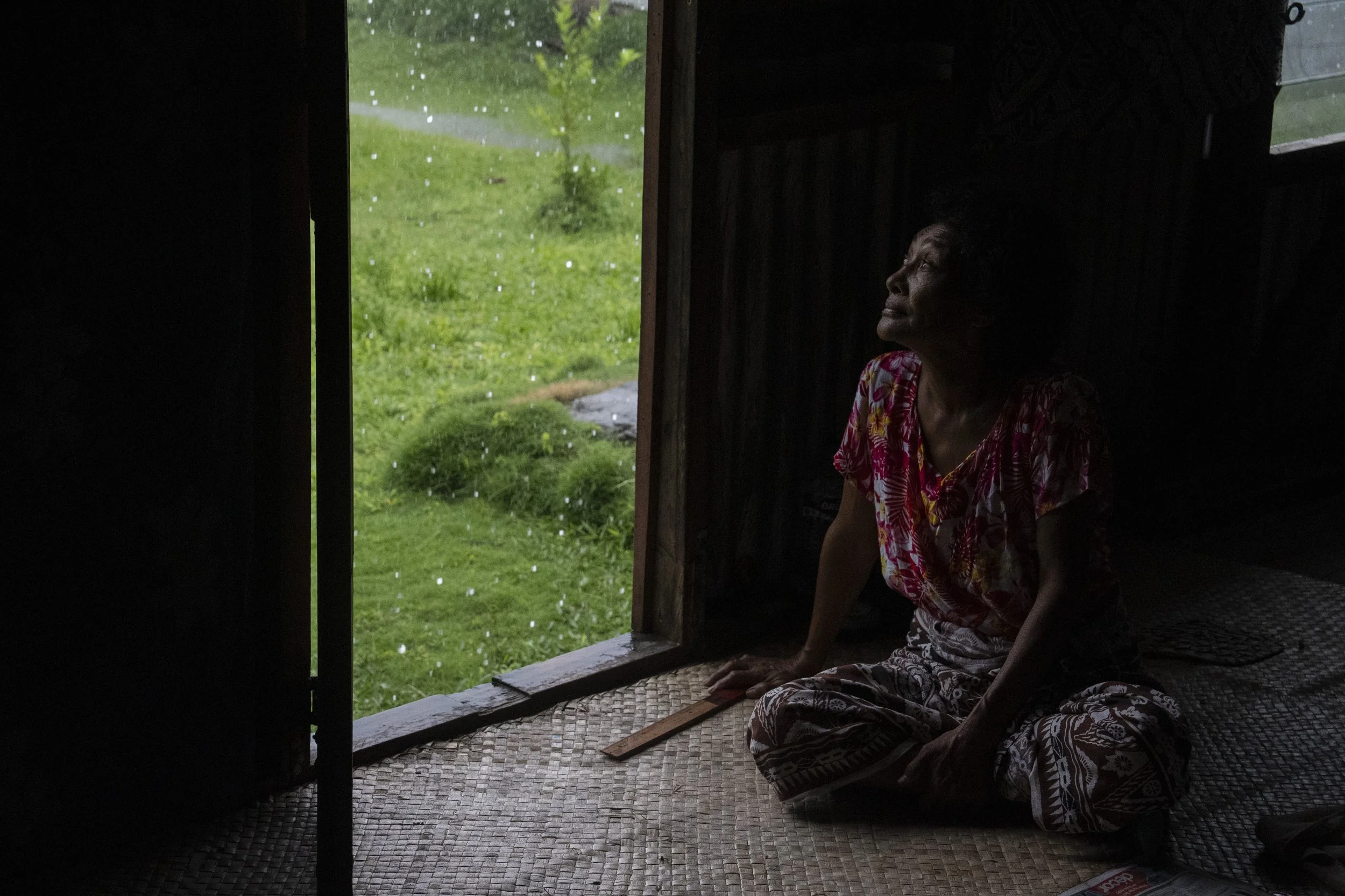
Raikro Beitaki anxiously checks the water level outside because she is concerned the water will rise to their house during a heavy rainstorm in Muani, Kadavu, Fiji on March 29, 2025. Her husband, Malakai Kuve, thinks that in ten years the village will be underwater. The village is on a list to be relocated to higher ground, but that move has not started yet. The idea of moving away from this land “makes me sad,” he said. “My father passed here. He taught me everything here.”
Fiji's Impossible Choice
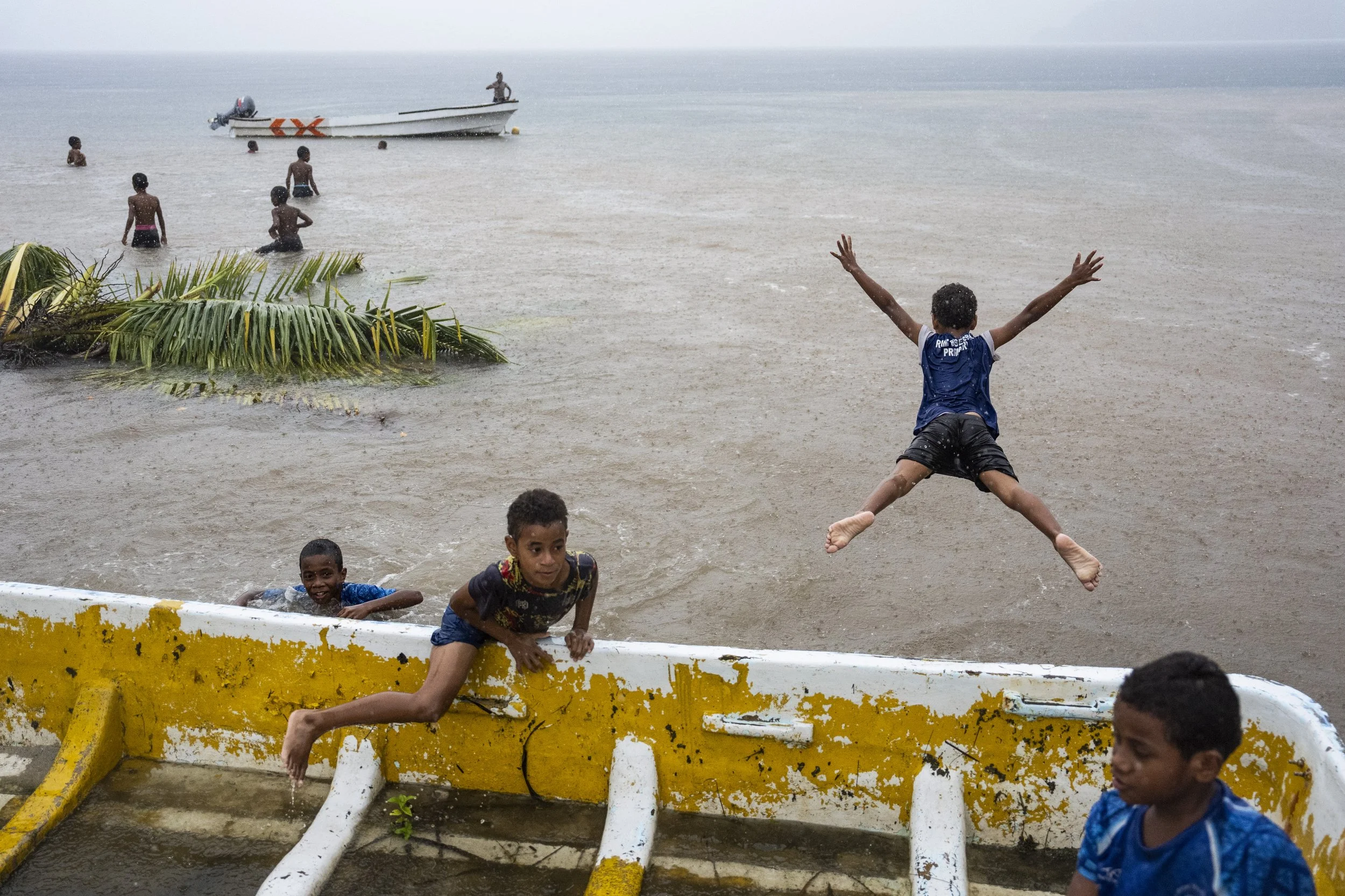
In the pouring rain during high tide, children play on waterlogged fishing boats and palm trees, which fell due to erosion from flooding, in Muani, Kadavu, Fiji on March 28, 2025. The water is murky from loose sand piled along the shore in an attempt build up the community's shoreline and protect its homes.Muani, a coastal community that relies heavily on fishing, faces risks of storm surge and sea level rise due to climate change. The community residents constructed a drainage network to mitigate surface run-off. They also have a stone seawall at the same height as the village ground during high tide, which does not protect them from flooding. A nearby site is set aside for relocating the village, but the community’s connection to the land, the steep hills surrounding the community, and funding are all contributing to delays in moving. Meanwhile, large parts of the village are underwater during high tides or heavy rainfalls.
Fiji's Impossible Choice
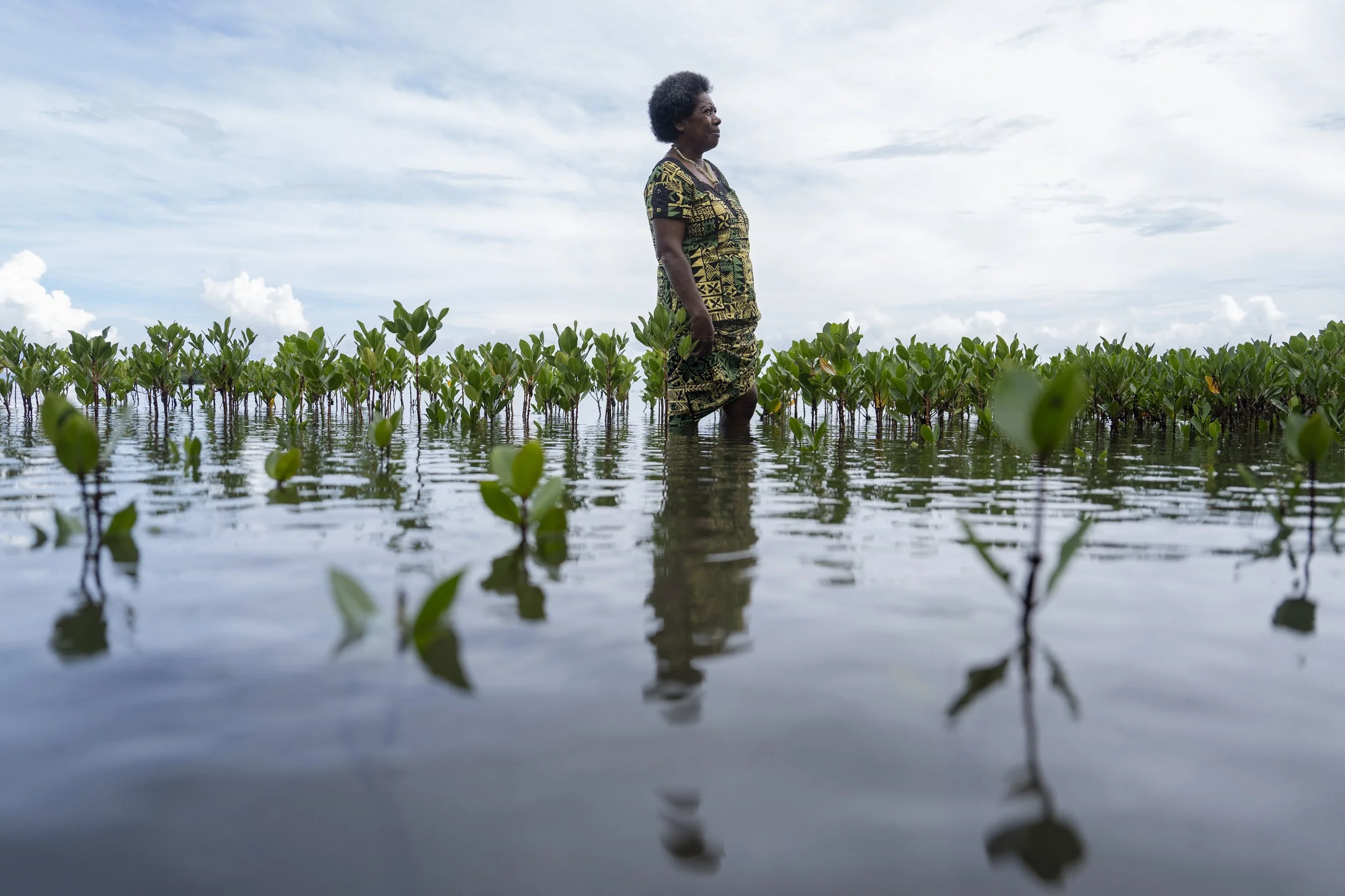
Mariana Sarawaqa stands for a portrait amongst the mangroves she planted herself to help protect the shoreline in Vunisavisavi, Vanua Levu, Fiji on March 25, 2025. Threatened by sea level rise, storm surges, and high tides, USAID moved a handful of households to higher ground, but most people in the community vowed to remain where they were. This was in part due to the significance of the land, which holds a sacred gravesite where one of the country’s most important chiefs is buried.
Fiji's Impossible Choice
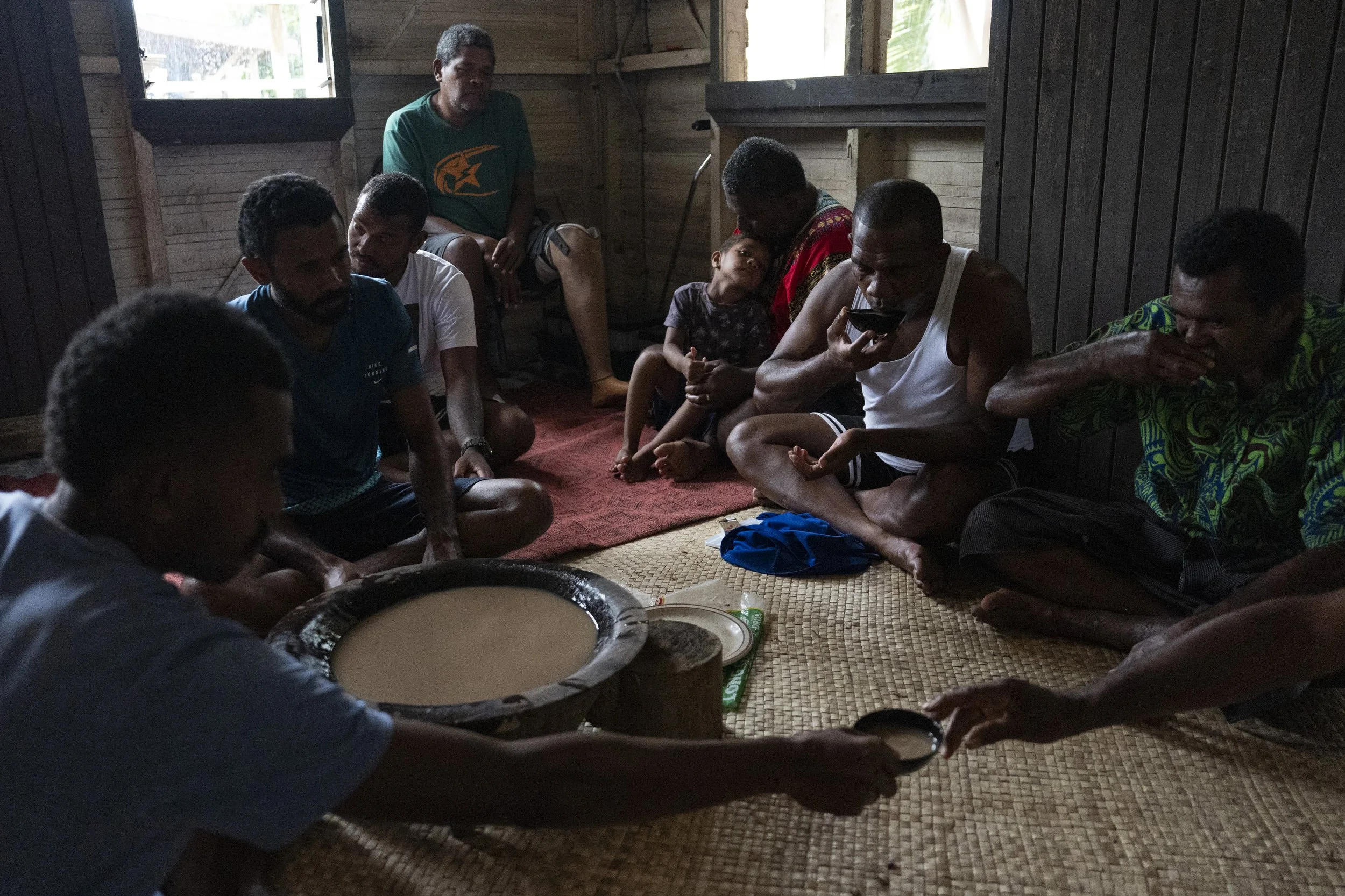
The community gathers to drink kava in memory of a community member who recently passed away in Muani, Kadavu, Fiji on March 28, 2025. Kava, a mildly sedative drink made from yaqona plant roots and served in a communal bowl, is a vital part of Fijian culture. It is frequently served during ceremonial gatherings and social events. Muani, a coastal community that relies heavily on fishing, faces risks of storm surge and sea level rise due to climate change. The community residents constructed a drainage network to mitigate surface run-off. They also have a stone seawall at the same height as the village ground during high tide, which does not protect them from flooding. A nearby site is set aside for relocating the village, but the community’s connection to the land, the steep hills surrounding the community, and funding are all contributing to delays in moving. Meanwhile, large parts of the village are underwater during high tides or heavy rainfalls.
Fiji's Impossible Choice
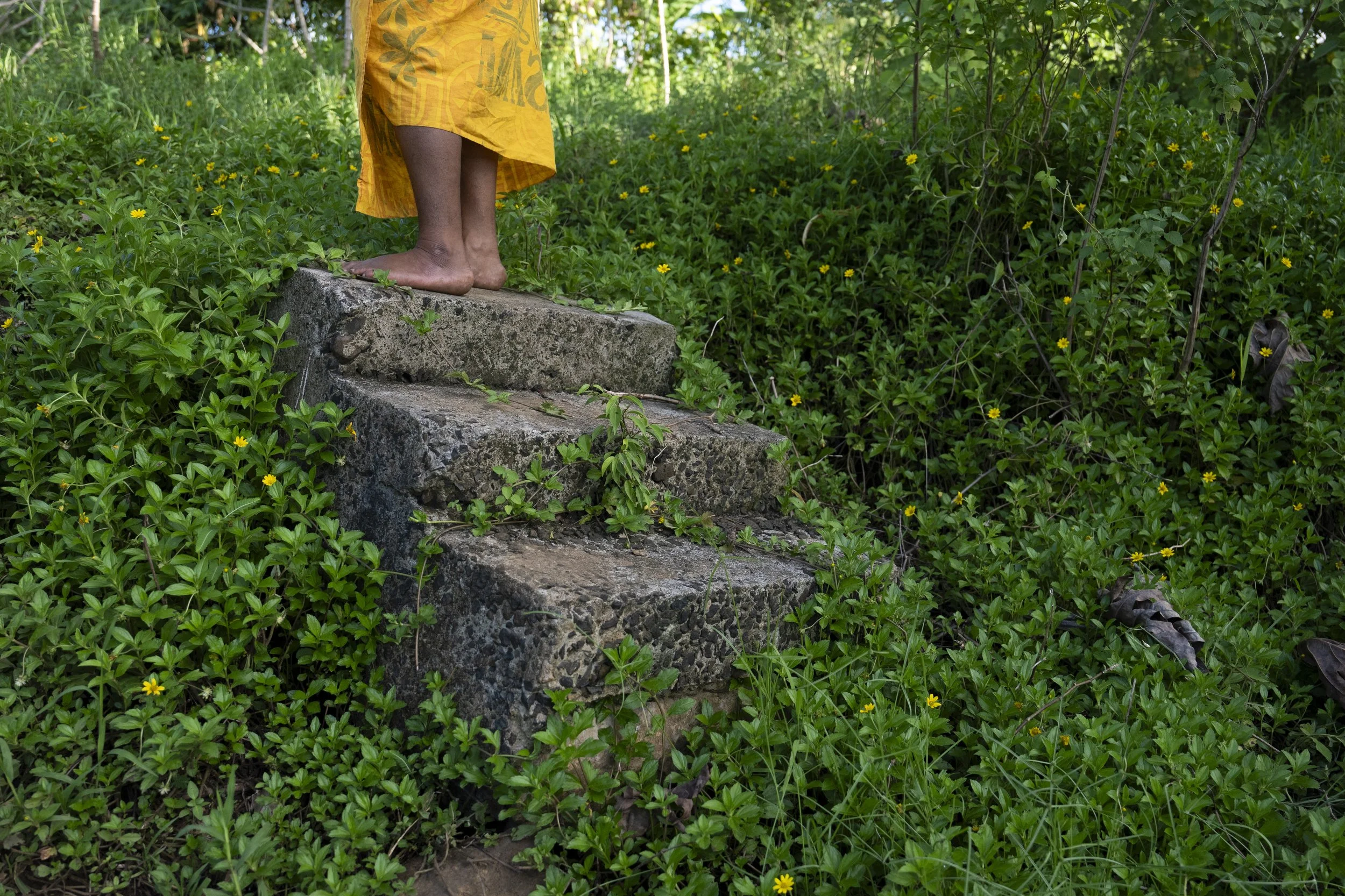
Baseva "Ba" Diroko, 44, stands on the steps of a destroyed home in Cogea, Vanua Levu, Fiji on March 26, 2025. The Wainunu river previously flooded the village during two cyclones, washing away several homes. Flooding from the river is a concern for the future of the community causing the relocation of the community higher up the valley.
Fiji's Impossible Choice
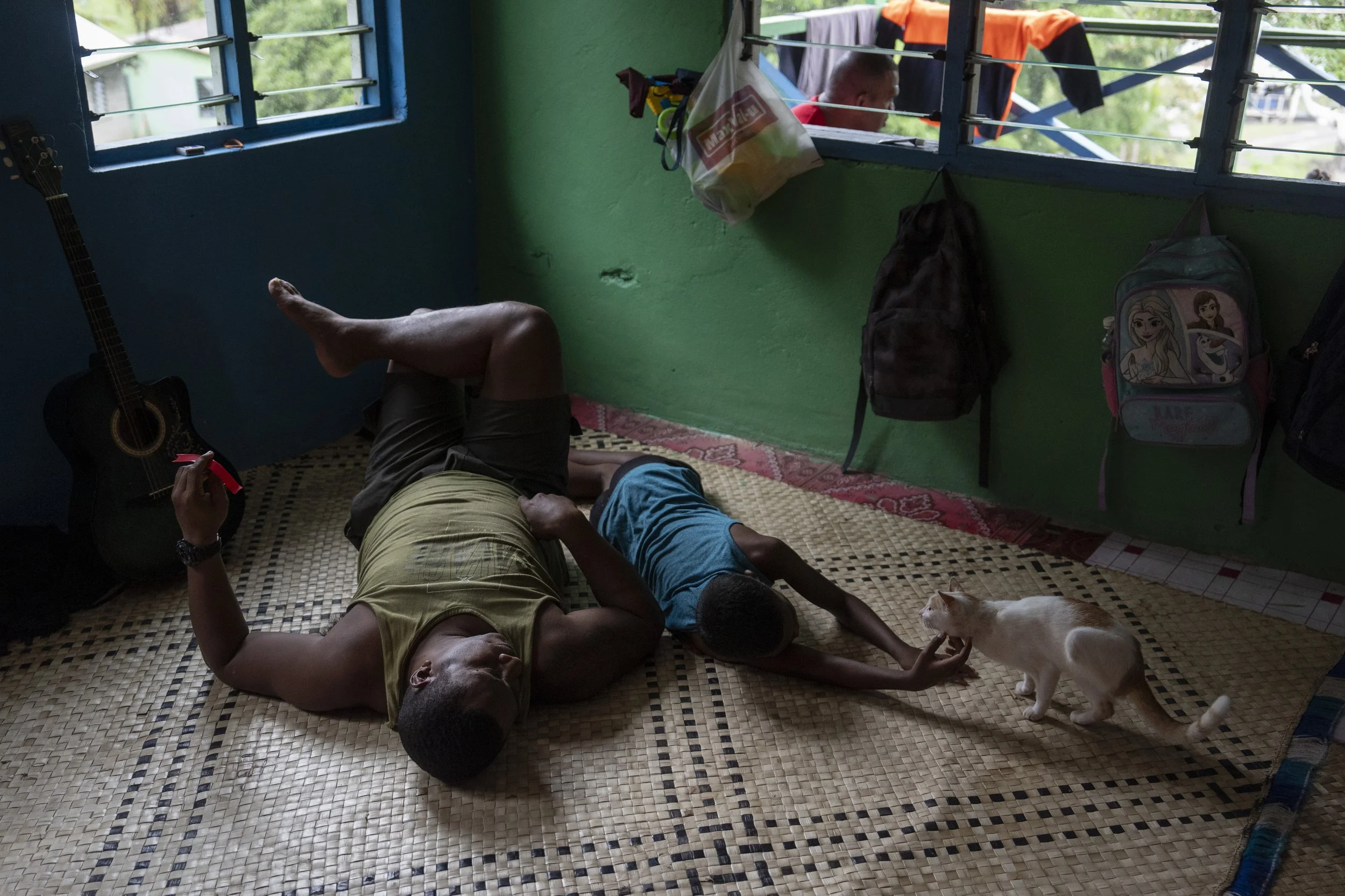
Abraham Joji Seru, 10, rests with Lemeki Navusolo at home in Muani, Kadavu, Fiji on March 29, 2025. Lemeki works at the school and runs a local shop in the community. Many community members have multiple roles in the village, because it is remote and self-reliant.
Fiji's Impossible Choice
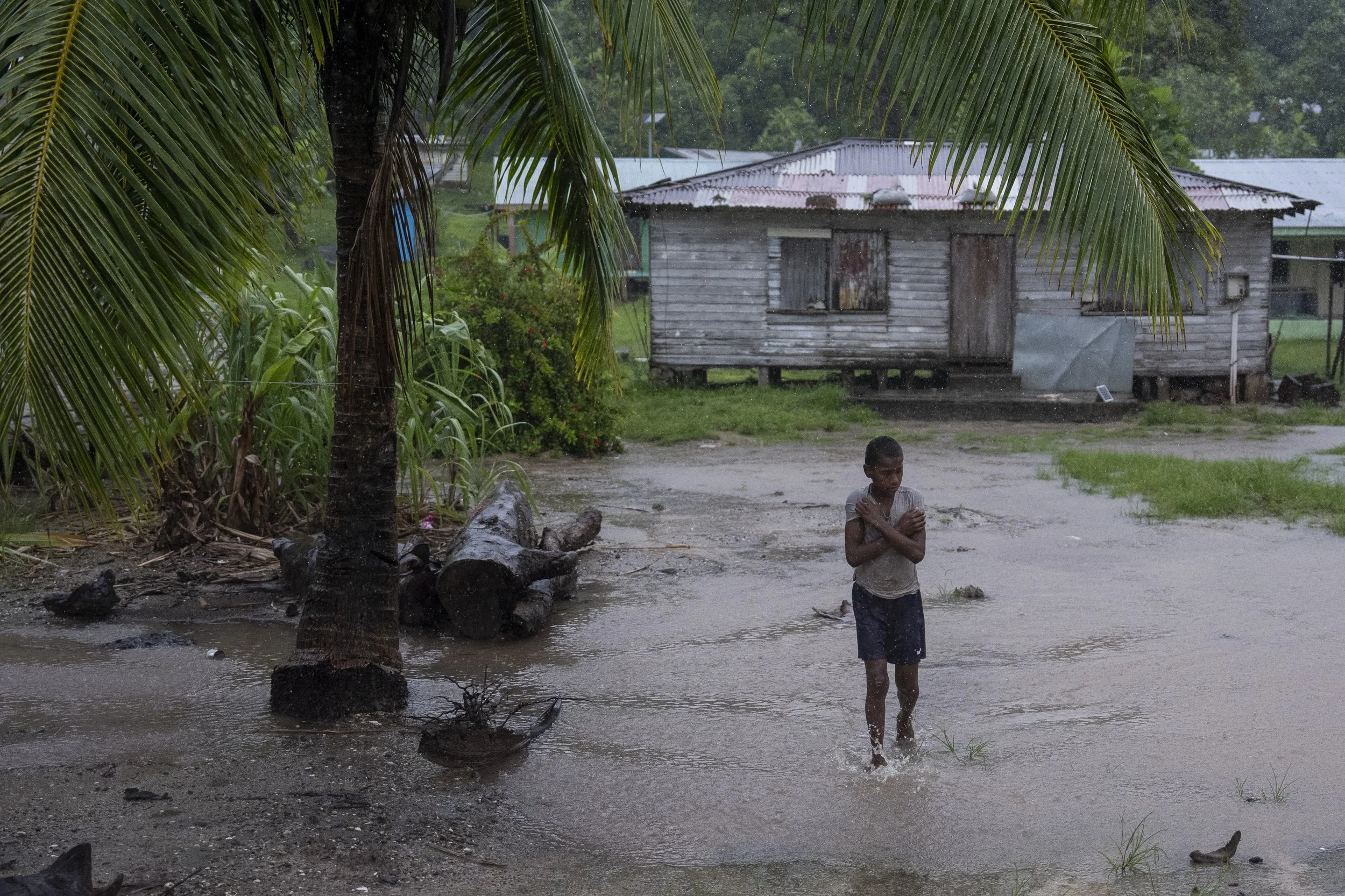
Anare Ratulutu, 11, walks through flooding, which happens frequently due to high tides and heavy rains, as it begins to reach the homes in Muani, Kadavu, Fiji on March 28, 2025.Muani, a coastal community that relies heavily on fishing, faces risks of storm surge and sea level rise due to climate change. The community residents constructed a drainage network to mitigate surface run-off. They also have a stone seawall at the same height as the village ground during high tide, which does not protect them from flooding. A nearby site is set aside for relocating the village, but the community’s connection to the land, the steep hills surrounding the community, and funding are all contributing to delays in moving. Meanwhile, large parts of the village are underwater during high tides or heavy rainfalls.
Fiji's Impossible Choice
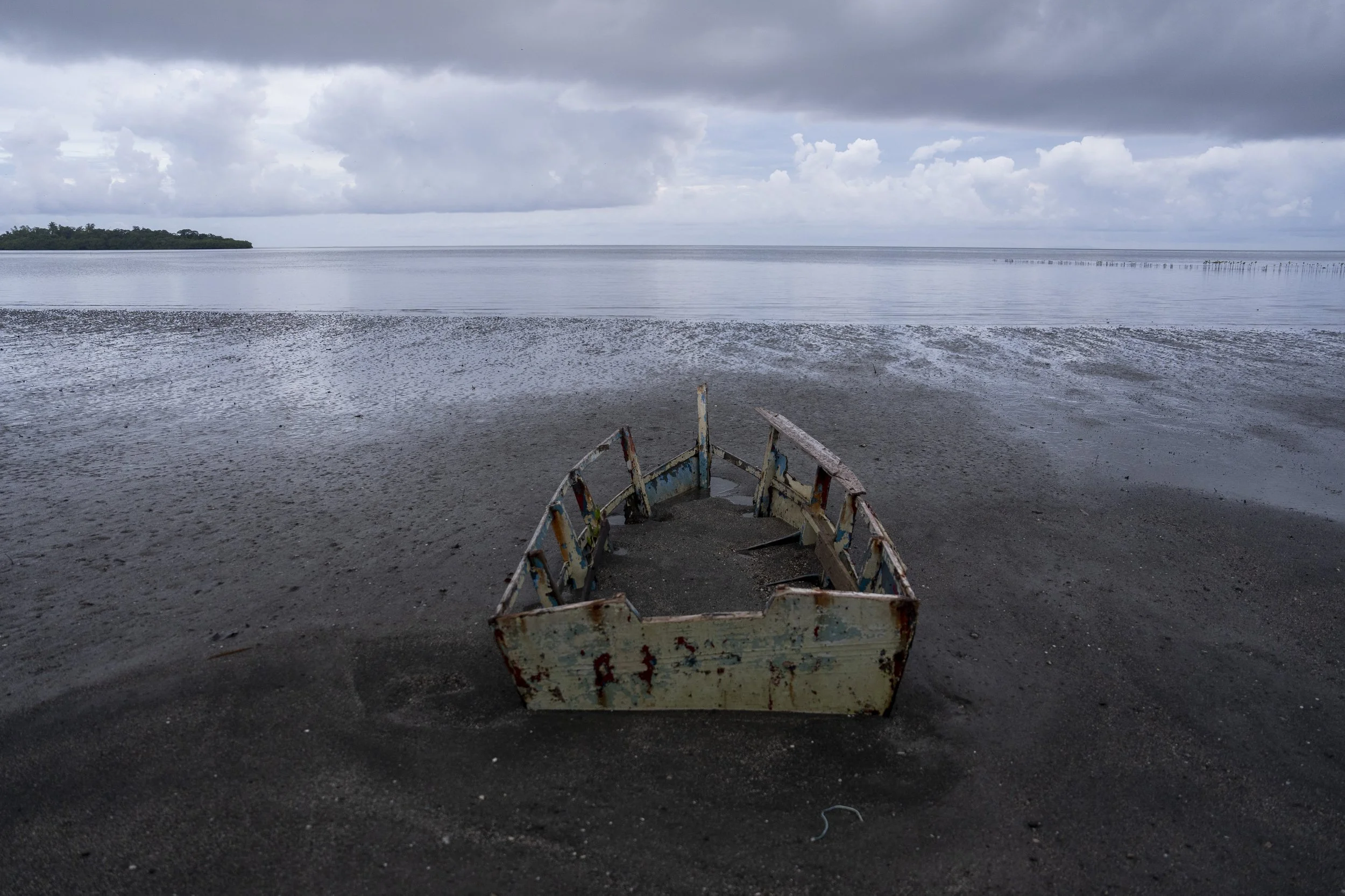
An old boat sits in the mud at low tide in Vunisavisavi, Vanua Levu, Fiji on March 25, 2025. Threatened by sea level rise, storm surges, and high tides, USAID moved a handful of households to higher ground, but most people in the community vowed to remain where they were. This was in part due to the significance of the land, which holds a sacred gravesite where one of the country’s most important chiefs is buried. As the high water recedes, communities in Fiji are often left with the damage that remains and an impossible choice: to stay and risk the water's wrath or leave their ancestral land and seek higher ground.